Buying a Samurai Sword in Kyoto
Can you buy a samurai sword in Kyoto and take it home? Yes. A real one needs papers, a replica needs none, and you can make your own in a workshop.
Yes, you can buy a samurai sword in Kyoto and take it home. Three different things are sold under that name, and the paperwork depends entirely on which one you buy: a real hand-forged Japanese sword needs papers on both ends of the journey, a replica needs none in Japan, and a sword you make yourself in a workshop is a replica you assembled.
The Three Kinds of Samurai Sword You Can Buy
- A real Japanese sword (nihonto). Forged and hardened by traditional methods, sold by specialist dealers with its registration certificate. These are art objects, priced as such.
- A replica. A mogito or iaito: a zinc or aluminium-alloy blade that is not sharpened, in real-looking fittings. Sold in souvenir and martial-arts shops, and at the end of several experiences.
- One you make. A workshop where you choose the fittings, cast the blade and assemble the sword yourself. It is a replica, and it is yours.
A Real Sword: the Papers
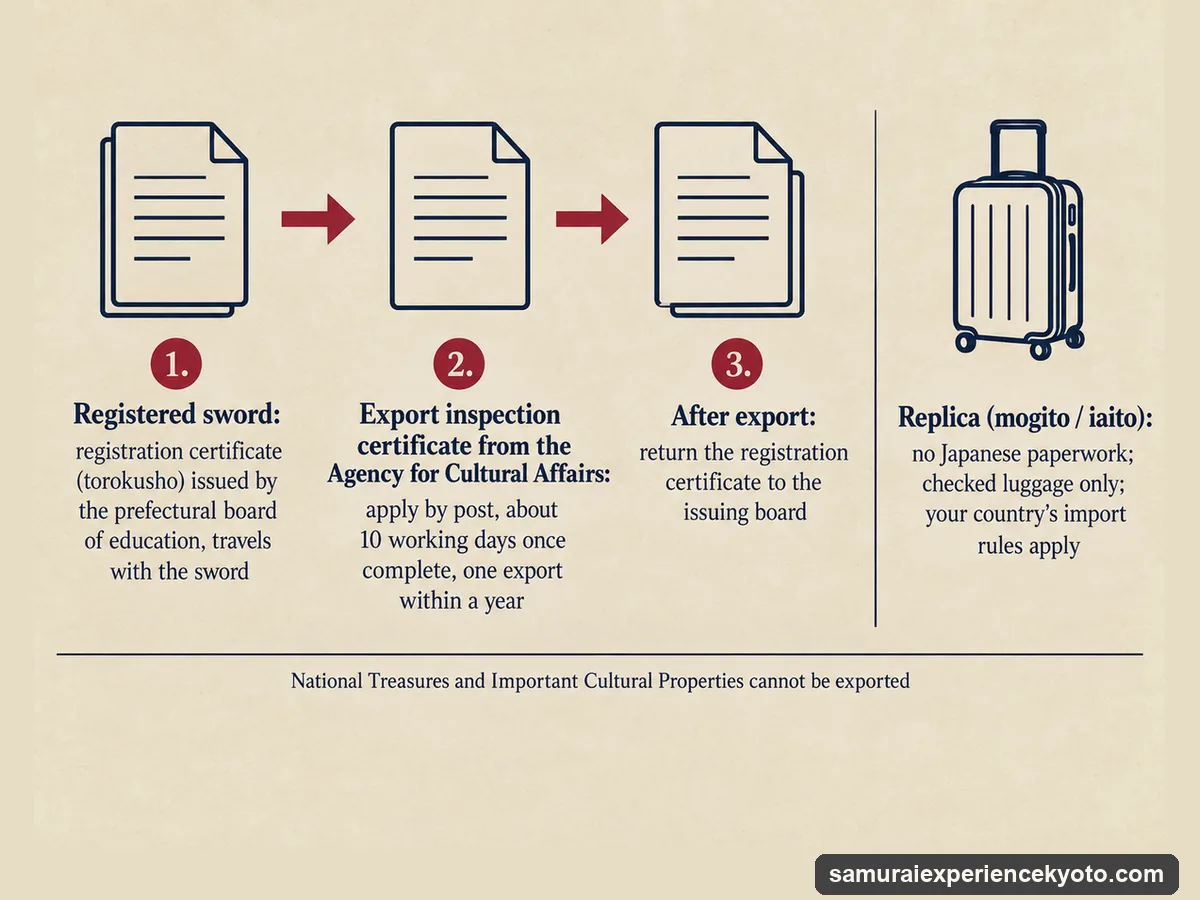
In Japan, a traditionally made sword can only be owned because it is registered. The board of education of the prefecture where the owner lives registers swords with artistic value and issues a registration certificate (tōroku-shō), which must stay with the sword whenever it is held, moved or sold. Foreign-made swords and Showa-era blades made without the full traditional process cannot be registered. Even a registered sword may not be carried around without a legitimate reason, so it goes from the shop wrapped and packed.
To take one out of the country:
- The export inspection certificate. The Agency for Cultural Affairs (Bunkacho) issues a certificate (kobijutsuhin yushutsu kansa shomei) confirming the item is not a National Treasure, an Important Cultural Property or a certified Important Art Object. Customs can ask for it. The agency takes applications by post only, at its office in Kyoto; for a registered sword you enclose a copy of the registration certificate and photographs of the blade, front, back and tang. The standard is 10 working days once the file is complete; as of October 2026 the agency says it often takes longer. The certificate covers one export within a year.
- The registration certificate goes back. After the sword is exported, the certificate is returned to the prefectural board of education that issued it. The sword leaves Japan without it.
- Designated swords stay. National Treasures, Important Cultural Properties and Important Art Objects may not be exported at all.
Reputable dealers do this paperwork and ship the sword for you; ask before you pay who files the export certificate and how long they expect it to take.
A Replica: No Japanese Papers, Two Practical Rules
A replica is not a registrable art sword, so none of the paperwork above applies to it on the Japanese side. Two rules still do:
- It flies in checked luggage only. No airline lets a sword into the cabin. The forging studio says the same of the ninja weapons it makes: checked bags, not carry-on.
- Your own country decides whether it can come in. Import rules for swords differ from country to country, and some restrict them or require a permit. Check your customs authority’s own pages before you buy, not at the arrival hall.
Make Your Own
The custom replica sword workshop ($191 per person, rated 5.0 by 30 guests, October 2026) is near Demachiyanagi Station. You choose the scabbard, the hilt and the cord, cast the blade in zinc alloy by pouring the metal into a mould, then sand, assemble, wrap and engrave it, learning the parts of the sword as you go. The finished sword is about 55 cm and for display only; it is not a weapon.
Two cheaper keepsakes from the same operator: the ninja weapon forging session (a steel shuriken or kunai, $146) and the tin-casting craft workshop ($108, open to children from 5).
Buying After an Experience
Several experiences end next to a shop. The kendo studio sells replica swords (not included in the price), as does the forging studio, and the Samurai Walk finishes at a shop with swords, clothing and armour. Nobody has to buy anything; it is simply convenient if you have already decided.
Quick Answers
Where can I buy a samurai sword in Kyoto? A real one from a specialist dealer, who hands it over with its registration certificate. A replica in souvenir and martial-arts shops, or at the kendo studio, the forging studio and the shop where the Samurai Walk ends. Or make your own at the replica sword workshop near Demachiyanagi ($191, October 2026).
Are samurai swords illegal in Japan? No. A traditionally made sword is legal to own once the prefectural board of education has registered it, and the certificate stays with the sword. What is not allowed is carrying one around without a legitimate reason.
Can you bring a katana back from Japan? A replica, yes, in checked luggage and subject to your own country’s import rules. A real one needs the export inspection certificate from the Agency for Cultural Affairs (by post to its Kyoto office, 10 working days as standard and often longer as of October 2026), and its registration certificate goes back to the board that issued it.
Can I carry a katana in Kyoto? A real one, even a registered one, not without a legitimate reason, which is why a shop wraps and packs it for the journey.
Where to See the Real Thing First
If you are thinking about a real sword, look at some before you shop. The Samurai & Ninja Museum has a wall of swords from different periods, and its guided tour explains what you are looking at. Holding a sword in a class is the other half: the sword class page sorts the classes by what they put in your hand.
Make Your Own Sword
The replica sword workshop near Demachiyanagi, rated 5.0 by 30 guests (October 2026): choose the fittings, cast the blade, assemble it and take it home.
See the Workshop Dates